

Marinated thinly sliced beef sirloin, poached eggs and steamed brown rice was a version I made for dinner of what we call "tapsilog" in Manila. Quite a favorite there for breakfast, lunch or dinner, it's served in many local restaurants around Manila. The term tapsilog is actually the combined syllables of three food-related words, tapa ( pan-fried marinated beef like jerky ), sinangag ( fried rice ) and itlog (egg). It may also be ordered "tapsi" without the egg. I must admit this is not a very healthy meal, the original meal version has everything fried. I made an effort to lighten it up a bit, by choosing to have poached egg instead of fried and switching to steamed brown rice instead of fried white rice. Although the meat was fried, I made sure I drained it well. The first eatery in Manila which comes to my mind when I think of this meal, is
GoodAh. This restaurant most probably started out as a small outdoor type cafe or what we call "carinderia". The diners sit in wood benches placed around a circular counter facing the main food source, where simmering casseroles of local rice porridge and other specials, are served from. Yes, I remember Goodah well, it was one of our favorite hang-outs back then. Fast, filling and very affordable. Some prefer it served with sliced tomatoes but I always like my tapa with a vinegar and garlic dip. An over consumption of rice isn't surprising for flavorful dishes like this and most Filipinos will agree to this. Not sure if GoodAh is still existing with the many new restaurants competing in Manila these days, after all, it wasn't the only restaurant serving this kind of food, there was also another successful one, Tapsi ni Vivian. But as long as they're out there, they will always have a solid market, catering to all lovers of simple Filipino comfort food.


 Started thinking about this steamed Chinese roll or bun when my cousin from Chicago told me about Wow Bao, Chicago's dimsum place selling these hot Asian buns, which they tried sometime ago. We both got inspired and tried to make them at home. Improvements have to be made to the dough with my initial trial but I think I must have undercooked the first batch I steamed. For the filling, I have leftover pork and chicken adobo which turned out a bit bland, so I shredded the meat and simmered it in a hoisin sauce based sauce. I got the recipe for the filling as well as the dough from the local paper's food section which I clipped and saved. Back in Manila, my sister in law used to make siopao using a recipe shared by a cousin who learned it from one of Manila's well known cooking show tv personality Sylvia Reynoso-Gala. She has a cooking school in Manila where my cousin took the class. There's another good siopao store and brand in Manila, Kowloon. I remember their siopao with the whitest dough I've ever seen and with a very fine fluffy texture. Sometime ago when I was experimenting on a puto or steamed rice cake recipe, I tried folding in or adding beaten eggwhites to the rice cake batter before steaming and the result was very similar to the Kowloon siopao dough. I thought that must be the recipe and technique they use. They must use rice flour instead of all purpose flour. No wonder the texture is quite different. I need to research more about it though. Siopao, has long been a favorite in the Philippines. It's best paired with hot mami or Asian style noodle soup made with chicken or beef.
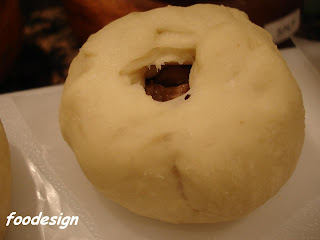 ready to be steamed siopao


 Another attempt to make the elusive puto or Philippine-style steamed rice cakes. Haven't given up yet and thanks to